Smart Grid Data Fabric
The data layer for analytics, AI and energy
Data-driven solutions only work when data is reliable, accessible and usable.
Smart Grid Data Fabric connects devices, storage, transformations and applications in a single open architecture designed for energy systems.
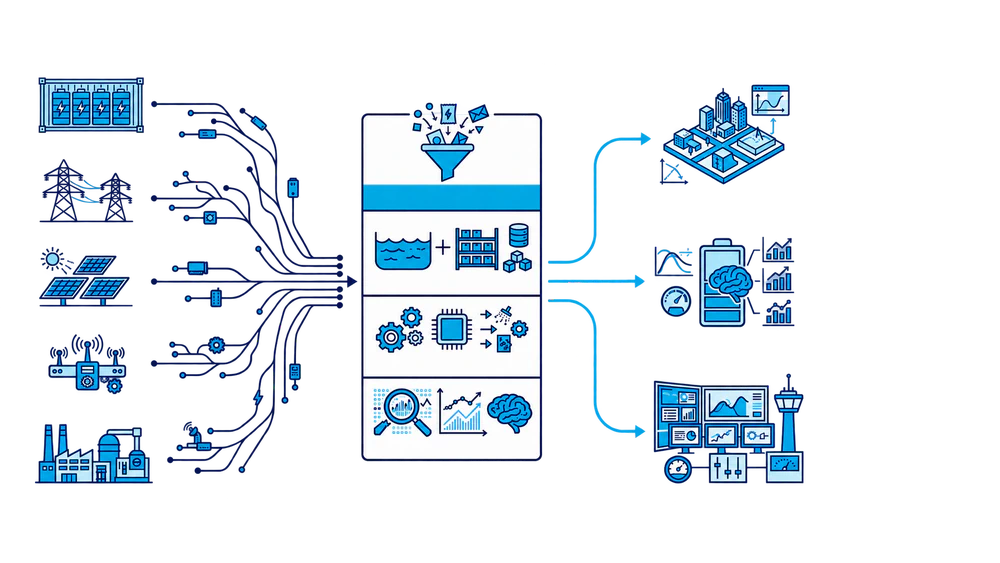
Data journey
From raw data to applications
A single flow connects field sources to the tools that use the data.
Ingestion & Streaming
Collects batch and streaming data from BESS, sensors, energy systems and other sources, making it consistently available within the platform.
Analytical Lakehouse Storage
Stores historical and operating data in open analytical formats, creating a shared foundation for processing, queries and applications.
Data
Transformation
Transforms raw and heterogeneous data into consistent, validated datasets, ready for the analytical applications, dashboards and downstream tools.
Analytical Query Engine
Enables querying and analysis of large volumes of data directly on the analytical layer, reducing unnecessary data movement and duplication.
Analytics & Exploration
Makes curated data available to dashboards, analytical applications and machine learning or artificial intelligence models, without duplicating it.
Demonstration
See it in action
From data collected in the field to analytical queries: Smart Grid Data Fabric makes the entire data journey accessible in a single environment.
Data sovereignty
Data is an asset. Its value grows when it stays under your control.
Energy system operators generate a wealth of data every day. The challenge is not generating it, but retaining, understanding and reusing it without losing control or technological independence. Smart Grid Data Fabric gives data owners the tools to realize its value while maintaining sovereignty, portability and transparency.
Open source
No licensing costs
The platform core uses open source technologies, reducing recurring data layer costs and preserving the freedom to evolve the technology.
No lock-in
Open standards and formats
Data remains accessible through open technologies and formats, avoiding dependence on a single vendor for your information assets.
End-to-end
Everything needed, without unnecessary complexity
Ingestion, storage, transformation, queries and analytics coexist in a compact architecture, avoiding layers of unnecessary services.
Portable
Cloud, on-premises or hybrid
Containerization allows the same architecture to run in the cloud, on the client’s infrastructure or in hybrid configurations.
Auditable
Traceability, immutability and transparency
Data and processes can be managed in a traceable, verifiable way.
Multi-node
Scalability and data sovereignty
Multiple nodes can work together to distribute workloads or keep data close to where it is generated.
Architecture
Horizontal scaling and data federation
A multi-node architecture does more than handle more data: it lets you choose where to run computations and where to keep data.
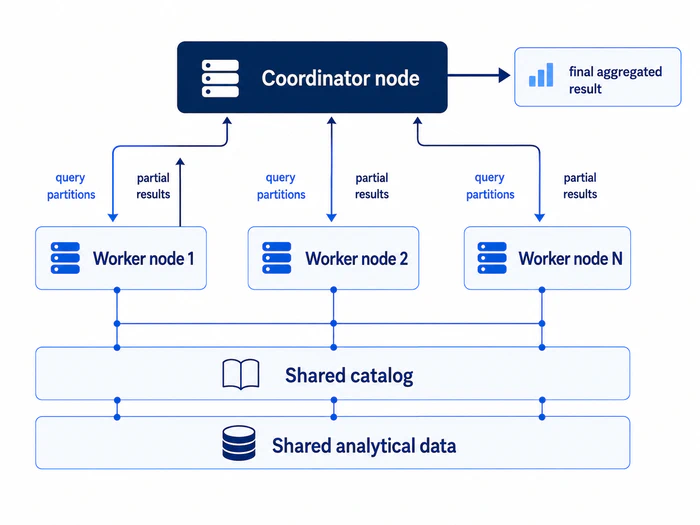
Horizontal scaling
Grow by adding resources, without replacing the architecture
As data volumes and workloads increase, new nodes can be added to distribute processing and progressively increase system capacity.
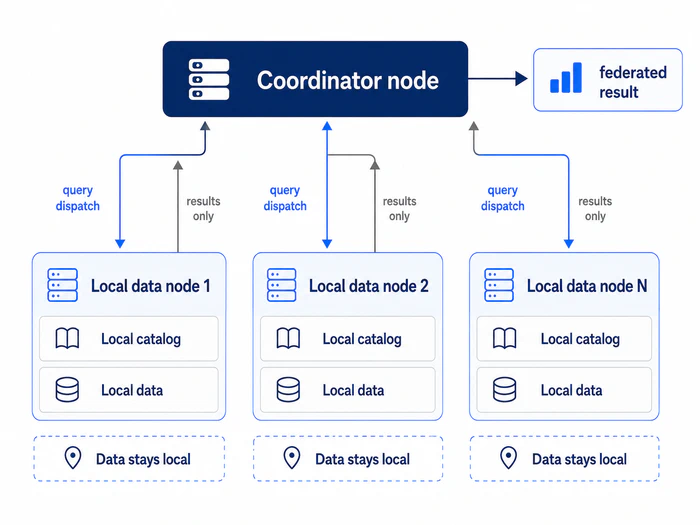
Data federation
Data can stay where it is generated, without being moved
Different sites or organizations can keep their data locally and make it available in a controlled way, building a federated view without centralization.
Performance
High performance with modest resources
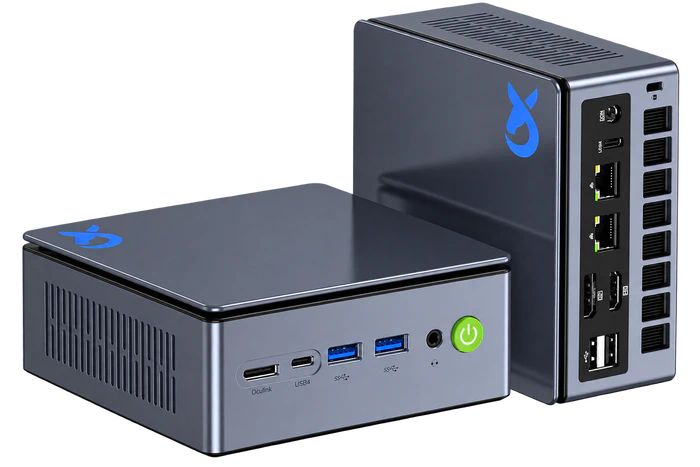
Efficient data infrastructure should not require oversized hardware for routine analytical tasks. Smart Grid Data Fabric uses modern analytical technologies and columnar formats to make efficient use of CPU, memory and storage, enabling substantial workloads even on compact hardware. Under the hood, Smart Grid Data Fabric uses DuckDB, an open source OLAP engine designed for high-performance analytics directly on data, with the project’s continuity and independence safeguarded by the DuckDB Foundation.
Hardware utilizzato
CPU: Ryzen 7 PRO 6850U
CPU type: 8 core / 16 thread
RAM: 32 GB DDR5
Storage: 1 TB NVMe
Dimensions: 132×125×58 mm
Benchmark TPC-H
Scale factor: SF100
Dataset: ~26 GB - 22 queries
Total time: ~200 s
Median latency: ~7 s
Memory limit: 8 GB
Let’s build a data foundation that stays yours
From field data collection to analytical applications, Smart Grid Data Fabric enables open infrastructure built around your energy system’s data.
Let's discuss your data infrastructure